
From the Archives: How LABWC Helped Black Workers Be Heard During COVID-19
Some of the most important work LABWC has ever done wasn't about placing someone in a job. It was about making sure Black workers were heard at all.
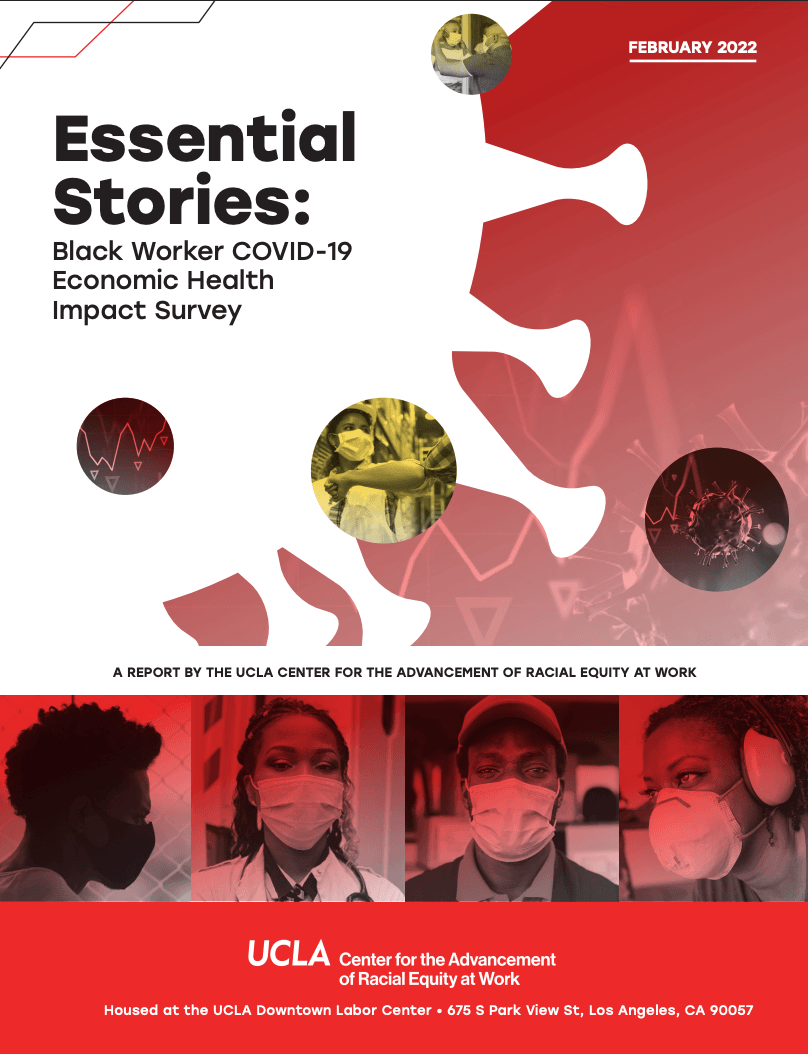
In February 2022, the UCLA Center for the Advancement of Racial Equity at Work published Essential Stories:
Essential Stories was a survey documenting how Black workers across Los Angeles, Riverside, San Bernardino, and San Diego counties were faring through the COVID-19 pandemic. The report exists because LABWC and its partners in the Southern California Black Worker Hub for Regional Organizing made it happen, and it stands as a powerful example of what community-rooted organizing can accomplish when a crisis threatens to leave Black workers out of the picture entirely.
What LABWC and its partners achieved:
Engaged over 40,000 Black workers across four Southern California counties through listening sessions, text banking, and phone banking between March and August 2021
Recruited nearly 2,000 Black workers to complete the full survey, capturing their experiences, challenges, and demands in their own words
Built this outreach entirely on relationships already earned through years of community organizing, rather than one-time outside recruitment
Ensured Black workers themselves, not just researchers, shaped the questions, the analysis, and the recommendations, through a research justice model that centered community expertise from start to finish
Turned individual survey responses into a policy agenda, with concrete recommendations directed at regional, state, and federal decision-makers
This kind of reach does not happen by accident. It happens because organizers had already spent years showing up in the neighborhoods, congregations, and workplaces where Black workers live and work, long before any survey was designed. That trust is what let LABWC and its partners ask people to share some of the hardest moments of their lives: job loss tied to discrimination, eviction, unsafe workplaces, and the daily toll of doing essential work without essential protections.
The report is dedicated to Sadé Williams, a storyteller and advisory committee member who helped shape the Essential Stories campaign and who passed away before its publication. Her voice, like the nearly 2,000 others captured in this survey, is part of why this work matters. Black workers do not need someone to speak for them. They need the platform, the trust, and the organizing infrastructure to speak for themselves, and to be believed when they do.
The recommendations that came out of this survey, stronger safety net navigation, workplace protections against discrimination, targeted mental health support, and direct investment in Black Worker Centers to lead "Know Your Rights" training, reflect exactly what LABWC has always understood: you cannot build solutions to the Black jobs crisis without first documenting, in workers' own words, exactly what that crisis looks like. Essential Stories stands as one clear example of LABWC putting that belief into practice.
This is the work your support makes possible: not just training and job placement, but the organizing capacity to reach tens of thousands of workers, listen to them, and turn what they share into real demands for change.
Help LABWC keep giving Black workers a platform to be heard. Give today.
